
Trial Chamber Finds Nuon Chea and Khieu Samphan Guilty of Crimes Against Humanity, Issues Life Sentences
On Thursday morning, the Trial Court Chamber of the Extraordinary Chambers in the Courts of Cambodia convened to present their Judgment in Case 002/01 – the first phase in case 002, the trial of Nuon Chea and Khieu Samphan. Both defendants, the last living senior leaders of the Khmer Rouge competent to stand trial, were present in court. The public gallery was at capacity, filled primarily by members of the public as well as large numbers of representatives from domestic and foreign media, Cambodian government officials, UN representatives, and foreign dignitaries. All were present to hear the Court’s decision on the guilt of the accused on charges of crimes against humanity.
The public gallery at the ECCC is separated from the courtroom by a large bank of windowpanes framed by traditionally carved wood paneling. When court is not in open session white curtains block the view into the courtroom. At 8:55 AM these curtains were drawn back to reveal the parties to the case, who had already taken their seats in the courtroom. Khieu Samphan chatted with members of his defense team while Nuon Chea sat still and expressionless; his eyes were concealed by the large sunglasses he often wears when in court.
Cambodian citizens of all ages were in the gallery, but the vast majority were old enough to have lived through the Khmer Rouge era. Former International Co-Lawyer for the Civil Parties, Elisabeth Simonneau-Fort, who left her position in May, was in attendance. Also present in the public gallery was Sok An, the First Deputy Prime Minister of Cambodia and his government’s liaison to the ECCC; David Scheffer, The UN Secretary-General’s Special Expert on United Nations Assistance to the Khmer Rouge Trials; Stephen Mathias, the UN Secretary General for Legal Affairs; and Stephen Rapp, US Ambassador-at-Large for War Crimes, among many other ambassadors and representatives of foreign governments. At 9:05 AM all stood as the judges of the Trial Chamber entered the courtroom.
President Nil Nonn announced the purpose of the hearing: to issue a judgment in Case 002/01. After verifying that all parties were present, he ordered courtroom security officers to escort the defendants to the dock. Khieu Samphan walked slowly to the dock and took his seat there. Nuon Chea, already sitting in a wheelchair, was then pushed into position. The President then stated that a summary of the judgment would be read. At approximately 9:12 AM his reading of the judgment summary commenced.
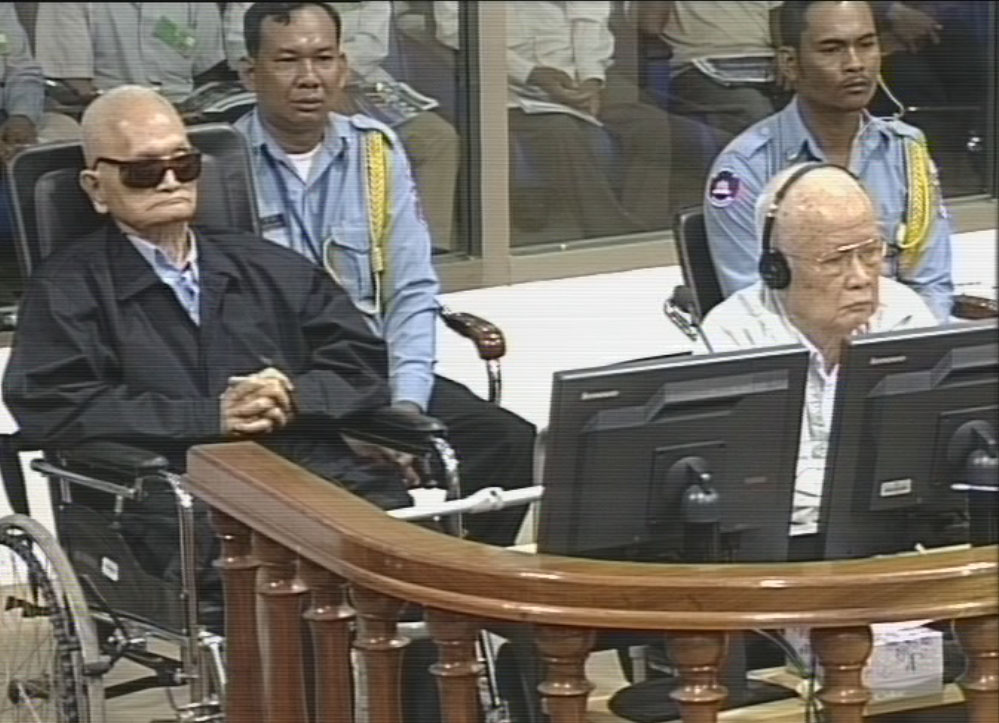
Nuon Chea and Khieu Samphan
Source: Documentation Center of Cambodia Archives
Reading the Judgment Summary
The judgment summary began by outlining the topic of Case 002, identifying the defendants, and providing a basic timeline of the proceedings. It went on to provide a history of the defendants’ involvement in the Khmer Rouge. Starting with the beginning of the Cambodian Communist Party, formed in 1959 by Pol Pot and Nuon Chea, and continuing through the April 1975 assault on Phnom Penh, the findings of the Trial Chamber were read by President Nil Nonn. These findings illustrated how the leaders of the organization that had become the Communist Party of Kampuchea (CPK) created policies that would lead to the crimes alleged in Case 002. Two of these policies were the focus of this first trial – Case 002/01. The first was the strategy of moving portions of the population from cities and towns into the countryside. The second was the targeting of specific groups who were considered enemies. In this case, the group targeted included all those who had been officials of the preceding Khmer Republic government.
The summary continued, describing how the Khmer Rouge began using force to transfer populations within territory it controlled as early as 1970. The Trial Chamber found that this strategy sought to prevent enemies from destabilizing the CPK. It was also intended to prevent Khmer Rouge cadres from being corrupted by the influence of urban dwellers, the Chamber explained.
The Chamber found no evidence of a written directive to target Khmer Republic officials, but described a pattern of distinct and escalating methods that the Khmer Rouge used to dispose of these enemies. The Chamber explained that in the early days of the conflict, captured soldiers of the Republic were often allowed to live after being re-educated while suspected spies were executed. By the time of the assault on Phnom Penh, the Chamber stated, this was no longer the case and representatives of the Khmer Republic would almost certainly be executed if captured. The Chamber found that the practice of broadcasting radio messages promising amnesty to deserters from the Republic, which came into use in the months leading up to the taking of Phnom Penh, was a ruse that sought to mask this policy of execution.
The Chamber’s summary then began to address the three situations in which the crimes charged in Case 002/01, which took place between 17 April 1975, the date the Khmer Rouge took Phnom Penh, and 6 January 1979. The first was the forced evacuation of Phnom Penh, entitled “Movement of Population Phase One.” The second, “Movement of Population Phase Two,” was the subsequent forcible displacement of populations from eight Cambodian provinces. Finally, “Tuol Po Chrey” is the massacre of Khmer Republic officials at Tuol Po Chrey that occurred in the days following the taking of Phnom Penh.
Describing these three episodes, the Chamber explained that the systematic action by the Khmer Rouge caused, directly and indirectly, widespread death and suffering among the Cambodian population. In detailing the impact of these actions, the Chamber repeatedly made use of Civil Party testimony that described, first hand, the horrors experienced and witnessed by those parties to the case. The Chamber rejected defense arguments that offered alternate explanations for these occurrences, finding that the policies, orders, and actions of the Khmer Rouge resulted in:
- The forcible transfer of at least 2 million residents of Phnom Penh leading to large-scale death by killing, starvation, exhaustion and illness during a journey that lasted between several days to several weeks. The forcible transfer was a decision made by the Khmer Rouge leadership made for ideological reasons and not out of a concern for public safety;
- A period between 1975 and 1977 when 3-400,000 people in eight Cambodian provinces were forced to relocate, either by force or because of the harrowing conditions created by Khmer Rouge policies;
- The targeted extrajudicial execution of at least 250 Khmer Republic and Lon Nol government officials, including civilians, who had surrendered and who were subsequently “either buried at Tuol Po Chrey or bulldozed into a pond using equipment sent by the Zone Committee” upon execution.
Crimes Against Humanity
The summary then began describing the charged crimes against humanity in detail. The Chamber found that during the period in question there was a “widespread and systematic attack against the civilian population of Cambodia” and that this attack amounted to “forced transfer, murder, extermination, enforced disappearances, attacks against human dignity, and political persecution.” The Chamber found that millions of civilians were victimized by this attack which was “carried out in furtherance of, and pursuant to, Party polices and plans;” that the attack was widespread; and that the scope and magnitude of the attack as well as its congruence with known party policies indicates that it was systematic. The Chamber then listed the specific crimes that it found to have occurred in each situation:
Movement of Population Phase One
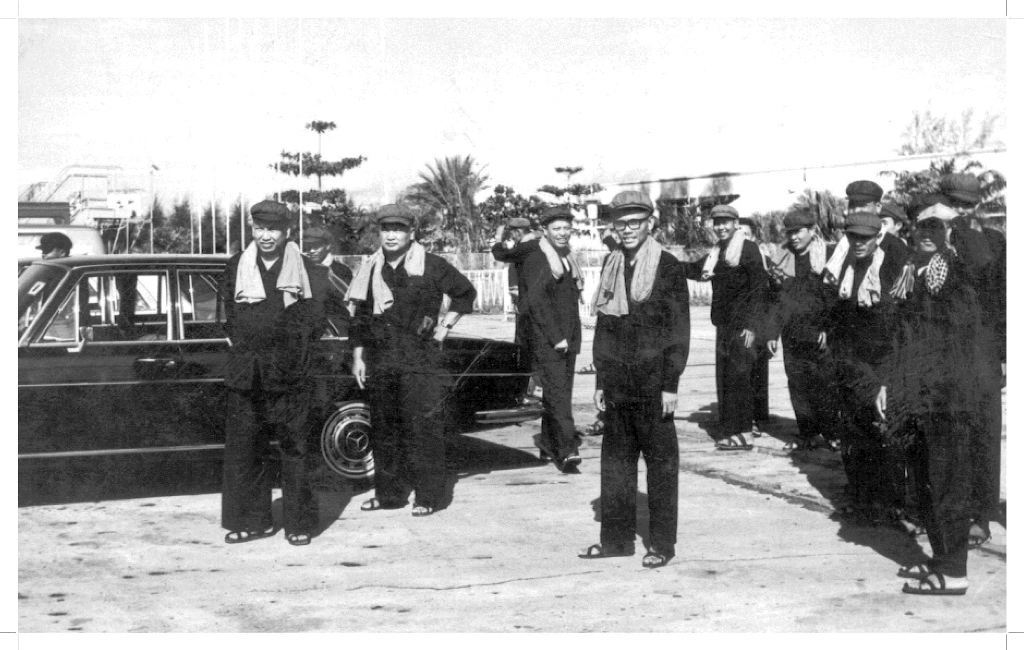
Democratic Kampuchea Leaders and Members of the Standing Committee.
Source: Documentation Center of Cambodia Archives
- Murder
- Extermination
- Political Persecution
- Other Inhumane Acts
- Forced Transfer
- Attacks Against Human Dignity
Movement of Population Phase Two
- Extermination
- Political Persecution
- Other Inhumane Acts
- Forced Transfer
- Attacks Against Human Dignity
- Enforced Disappearances
Tuol Po Chrey
- Murder
- Extermination
- Political Persecution
Joint Criminal Enterprise
President Nil Nonn then continued reading the next section of the judgment summary, which addressed the issue of Joint Criminal Enterprise (JCE) – a form of criminal liability alleged for some of the crimes charged in the Closing Order of Case 002. The Chamber explained that JCE was a basis for liability in the following crimes:
Movement of Population Phase One
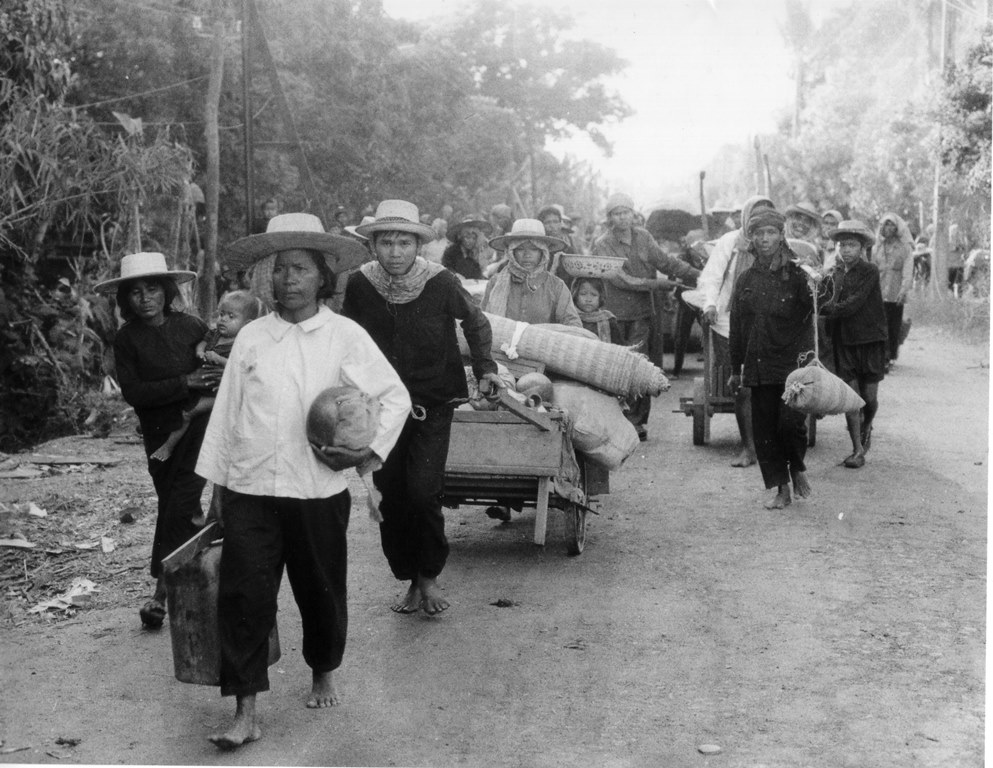
Cambodians Making the Long Journey Back to Their Home Villages
Source: Documentation Center of Cambodia Archives
- Murder
- Political Persecution
- Other Inhumane Acts
- Forced Transfer
- Attacks Against Human Dignity
Movement of Population Phase Two
- Political Persecution
- Other Inhumane Acts
- Forced Transfer
- Attacks Against Human Dignity
Tuol Po Chrey
- Murder
- Extermination
The Chamber noted that for the crimes that were not charged under JCE, other modes of liability were at issue. It then went on to describe the existence of a JCE in the current case. The Chamber found that a common purpose existed among a “plurality of persons” that intended to bring a socialist revolution to Cambodia. The members of the Standing and Central Committees, government ministers and Zone secretaries were all found to be participants. The Chamber listed Nuon Chea and Khieu Samphan as members of one or more of those groups during the period of the case. Additionally, the Chamber found that the JCE used, among its means, the policies of population movement and targeting of groups to further its plan for revolution. Crimes charged under JCE in Case 002/01 were examples of these policies and they could be properly imputed to the members of the JCE.
The Big Questions, Finally Answered
Having established the occurrence of crimes against humanity and existence of a JCE, the Chamber then addressed the role, functions, and criminal liability of each defendant in turn, starting with a brief biography of the defendant and continuing to issues more directly related to the case. Both defendants held a number of important positions in the CPK and the Khmer Rouge government of Democratic Kampuchea. Furthermore, both acted as Prime Minister of Democratic Kampuchea at one time. Beyond that, their roles and functions differed.
Nuon Chea
Nuon Chea rose through the Party to have primary responsibility for both propaganda and education in the CPK, a role in which he disseminated and advocated for the policies of the Khmer Rouge. The Chamber also explained that his long involvement with the party allowed him to have oversight of many party activities that he was not formally in charge of. Despite finding insufficient evidence that Nuon Chea was a member of the CPK’s Military Committee, the Chamber stated that “within the Standing Committee, Nuon Chea, along with Pol Pot, exercised the ultimate decision-making power of the Party” and that he was involved with the overall administration of Democratic Kampuchea, including security and military matters.
On the ultimate question of criminal responsibility the Chamber found that “Nuon Chea made a significant contribution to the realization of the common plan” and that he helped to develop and promote the common purpose. These findings establish Nuon Chea as an imputable participant in the JCE and therefore the Chamber found he was criminally responsible for each of the crimes charged under JCE. In regards to the non-JCE crimes, the Chamber found Nuon Chea liable due to the fact that he “planned, ordered, instigated, aided and abetted” those crimes.
Additionally, the chamber found Nuon Chea criminally responsible for all the crimes listed, both directly and indirectly as a superior. The Chamber stated that it was not necessary to enter a conviction under the doctrine of superior responsibility but that Nuon Chea’s superior position would be considered in his sentence.
Khieu Samphan
Khieu Samphan was with Pol Pot from the beginning and was one of the ideological founders of the Khmer Rouge. The Chamber found, however, that in the Democratic Kampucheagovernment, Khieu Samphan’s official purview was “limited to matters of economics and foreign trade.” The Chamber also found that he was involved in foreign relations and made efforts to gain foreign support for Democratic Kampuchea and the radical policies of the Khmer Rouge. Although many of the titles he held were “symbolic,” his senior position gave him broad “authority and influence.” Additionally, it was shown that Khieu Samphan was “one of two members of Office 870, which oversaw the implementation of standing committee decisions”.
As a member of the JCE, the chamber found Khieu Samphan criminally liable for all of the crimes charged under JCE, listed above, as he “intentionally participated in, or contributed to, the design and implementation of the common purpose” through his broad involvement in the affairs of the Khmer Rouge and Democratic Kampucheaand his membership in the Central Committee and role in Office 870. He was additionally found liable for the crimes not charged under JCE as he “planned, instigated, aided and abetted” those crimes.
The Chamber noted that it would not hold Khieu Samphan liable under effective control or superior responsibility theories, as it found he did not have the authority to issue the criminal orders and the evidence did not establish that he had effective control over those who committed the crimes.
During the reading of these sections by President Nil Nonn, the Defendants remained seated in the dock. Nuon Chea sat against the back of his wheelchair and did not move, expressionless. In contrast, Khieu Samphan sat leaning forward in his seat as the Chamber began to build to this discussion of liability. He appeared to listen intently, elbow on the dock, chin rested in hand inquisitively. After the President began the section concerning his criminal responsibility he quickly leaned back in his chair and began to gaze around the court.
Civil Parties
The summary then briefly addressed civil party reparations, noting that 3,869 Civil Parties were represented in the case and that, along with innumerable other victims, they have suffered immeasurable harm due to the crimes of the accused. The Chamber had found both defendants indigent, however funds were made available by donors to help meet the Civil Parties’ requests for specific reparations measures. The Chamber then listed the thirteen projects that have been approved, including a memorial to victims in Phnom Penh. Two projects were named as not having been approved: a proposal for memorials in every province of Cambodia and another proposal for a memorial in France due its large Cambodian diaspora community. The summary indicated that there were insufficient funds at this time for those projects and that more detailed proposals would be needed in any case.
Please Rise
All that remained was for the final disposition and for the sentence to be read. President Nil Nonn instructed the defendants to rise and receive their sentence. Khieu Samphan stood but for a moment there was a pause in the proceedings. Nuon Chea did not appear to make any effort to move. “Stand!” a member of the public was heard to exclaim in Khmer before the President quickly broke the tension by informing the court that Nuon Chea was unable to stand due to his current medical condition.
Reading the disposition for each defendant in turn, the President stated that each was guilty of all crimes charged. Then he read:
“The Chamber has considered the gravity of the crimes for which the Accused have been convicted, as well as relevant aggravating and mitigating circumstances and witnesses’ testimony regarding the character of Khieu Samphan. In determining the sentence, the Chamber has also taken into account the Supreme Court Chamber’s pronouncements on sentencing in Case 001 and precedents from other international tribunals whose judgments have also evaluated sentencing considerations in relation to crimes of a massive scale.
The Chamber sentences the accused, Nuon Chea to Life Imprisonment.
The Chamber sentences the accused, Khieu Samphan to Life Imprisonment.”
President Nil Nonn finished, noting that the judgment is appealable and that both defendants will remain in detention at the ECCC until the judgment becomes final. The judges and everyone else stood as the white curtains closed. The reading of the summary judgment had taken almost exactly an hour and a half.
Following the judgment, two press conferences were held. One with comments from Sok An, David Scheffer, and Stephen Rapp; and the other featuring representatives from the legal teams of all parties. Details of these events will be summarized in a subsequent report for the Cambodia Tribunal Monitor.